



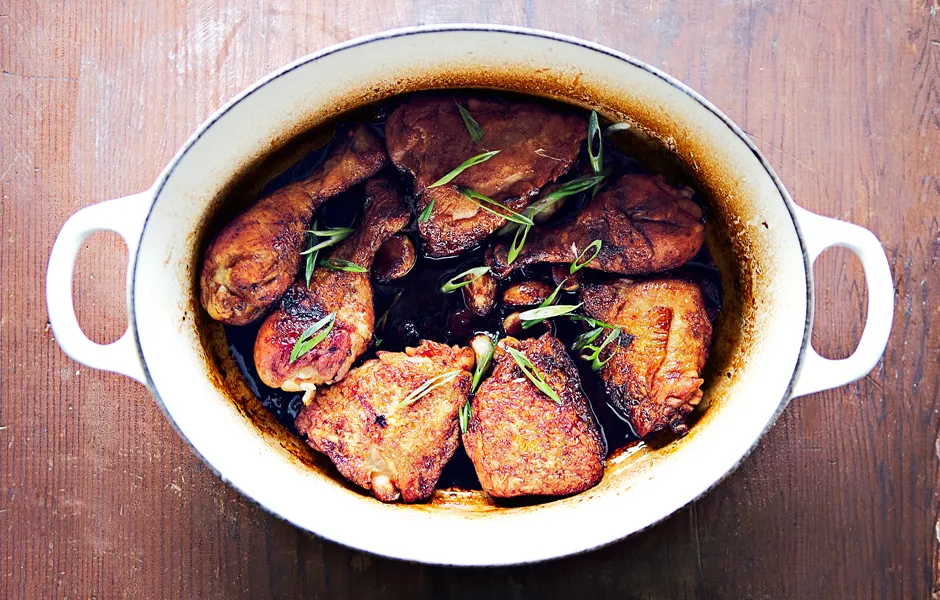
The best restaurant sauces can tempt even the most prim and proper of us to lift up our plates and lick them clean. But you can make a sauce just as luscious at home with pan drippings or leftover braising liquid—all it takes is a bit of time, technique, and butter.
For a pan sauce, you only need 5–15 minutes, while sauce made with braising liquid might take closer to 15–30 minutes to reduce down to the perfect viscosity. The best reductions are thick enough to coat the back of the spoon and hold their shape when you run your finger across it. The French word for that consistency is sauce nappante.
Here’s how to fast track your sauce from simple to complex, silky, and spoonable.

What Does Reducing a Sauce Mean?
Recipes for Thanksgiving gravy, a balsamic reduction, cider-braised pork chops, and countless others call for “reducing the sauce.” This simply means simmering it until some of the water evaporates, allowing the flavors to concentrate and the sauce to thicken.
How to Reduce a Sauce in 5 Simple Steps
Remove the meat: Whether you made short ribs, pork belly, chicken thighs, or a steak, you will want to remove the protein and any vegetables from the pan before you start reducing; they’re standing in the way. Once the sauce reaches the desired consistency, add the meat back in and rewarm it over gentle heat, spooning the sauce over.
Simmer uncovered and in a wide pan: Sauces need surface area to reduce. Using a large Dutch oven or wide saute pan lets the sauce spread out. If you only have a small pot on hand, the sauce will still reduce, but you’ll need to budget extra time because it’ll take longer. No matter which vessel you use, be sure to leave it uncovered, so the steam can evaporate.
Stir occasionally: Small quantities of sauce and certain ingredients are more prone to burning, but no matter the situation, stirring occasionally is always worthwhile. Think of it like stirring a cup of very hot chocolate, it helps release more steam, speeding up the process. It also helps everything incorporate nicely.
Taste and adjust: As the flavors of a sauce concentrate, so will the salt profile. Wait to add salt to your sauce until the very end.